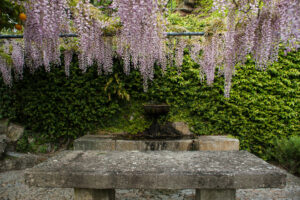
Wisteria at Quinta Covela
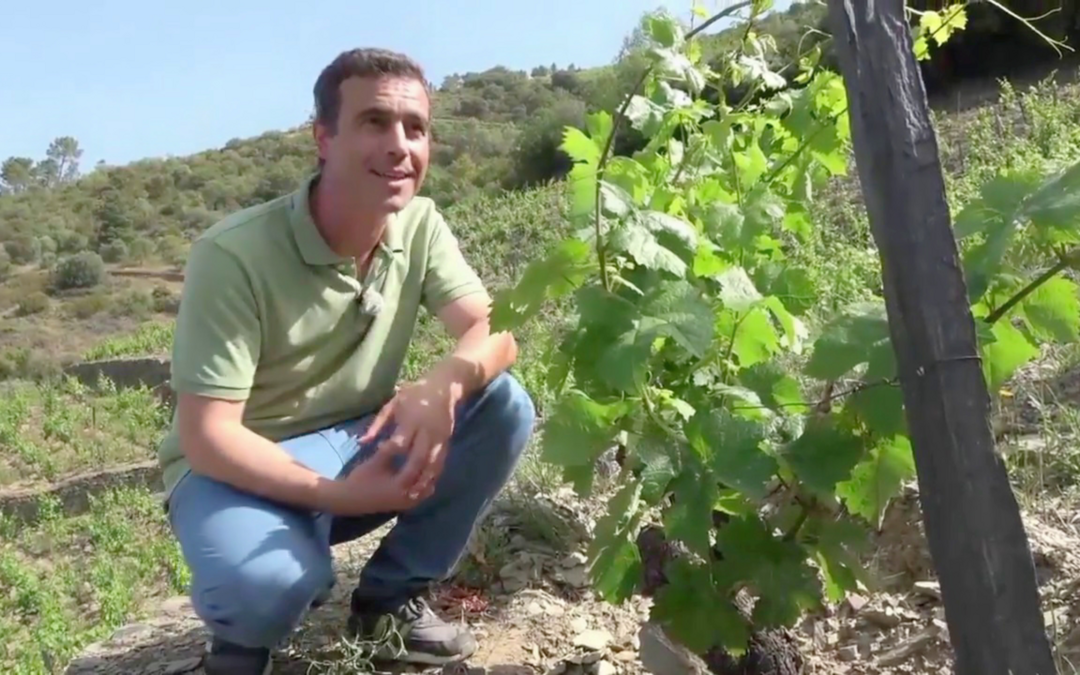
It’s a real pleasure to turn into Quinta Covela on the cooler downstream banks of the river Douro past Mesão Frio. You are greeted by a riot of greenery and vivid splashes of colour. And that’s before you see the vineyards. Passing beneath granite ramadas with low hanging wisteria you are guided gently down the curved cobbled road to a cluster of buildings nestling below and a warm greeting from a cheery Vitor Mendes. And who wouldn’t be cheerful working in a haven like this ?
Vitor tells me this area is the home of Avesso, a white grape variety native to this small corner of Portugal where the conditions are just right, warm drying breezes waft up from the river and swirl around this natural amphitheatre. Great for keeping mildew at bay. As you walk up and down the terraces there is an abundance of wild flowers in and around the vines. Variety builds resilience in any ecosystem explains Miguel Soares, the custodian of these vineyards and an agronomist by training. Miguel explains the concept of regenerative farming which aims to re-establish natural ecosystems and all those complex interdependencies (fauna, flora, microbes, water, soil and minerals) all the while giving nature a helping hand here and there.
The Soil
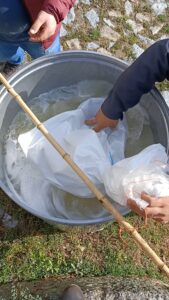
Mixing soils from indigenous forests
The soil supporting the vines is of course hugely important to the health of the vine and vice versa. One gram of healthy soil can have more micro-organisms than humans on earth Miguel notes. Along with the sun’s energy the vines turn carbon dioxide into sugars and share these via the roots with soil beneath which in turn supplies the vine with nutrients. Other microbes, earthworms and insects in the soil also thrive and their activity improves the soil structure and water retention.
To add another layer of complexity to the soil ecosystem, soils from indigenous forests in the region, naturally teeming with mycorrhizae, are scooped up and fermented with mashed vegetables to form a kind of special ‘brew’ which is sprayed over vineyard soils.
The Vines
A similar idea is used for making foliar bio-stimulants for the vine leaves, with plants such as horsetail and nettles which release compounds that compete with the fungal diseases that attack the vines. When the vines thrive so do their rhizospheres which in turn give the plant more nutrients. When the vine is fighting fit it produces secondary metabolites that protect it from disease and stress. These secondary metabolites are organic acids, vitamins, anthocyanins, aromatic compounds, complex sugars and proteins. In other words all the vital ingredients that make the grapes healthy, tasty and aromatic which in turn result in a better quality of wine.

Cover crops between Vines
Between the vines

Flattening the cover crops between the vines
Different species of cover crop each host their own microbes and insects that help to control other potentially vine damaging insects. At Quinta Covela, mustard, legumes, lupins and chamomile grow in abundance between the vines. There is no such thing as pests or disease only an imbalance in their numbers Miguel says. The soil is not tilled here but rather protected by rolling and flattening the grasses and wild flowers that grow between the rows of vines. This flattened carpet protects the soil from erosion and holds in precious moisture, allowing the earthworms to work their magic.
A healthy living soil provides healthier and more resilient vines concludes Miguel and the results speak for themselves in the incredible balance and flavours of these wines – why taste these Covela wines for yourself !